
Introduction

About the author: Joakim Edin is an AI researcher at Corti, and one of the architects of Symphony for Medical Coding.
You are ordering plane tickets. You have written your name, passport number, and date of birth, and now you must select your profession from a drop-down menu. To your horror, the drop-down menu has 14,000 options. You scroll through the endless list of professions: Superyacht Interior Outfitting Coordinator, Competitive Eating Event Logistics Manager, Haunted Attraction Prosthetics and Gore Technician, Medieval Reenactment Armorer, Plate and Chain Specialization, and so on. After half an hour, you finally find your profession: School Teacher. You ordered the tickets, but your request has been denied. The airline company found out that you are a high school teacher, and that school teacher was too vague.
Now, move away from your laptop and go to the hospital.
Every time a patient sees a doctor, someone must document each diagnosis by finding the correct label from a list of more than 14,000 options. In the United States, that list has 72,000 options. These labels are called medical codes. They determine whether the hospital gets paid, whether the insurance claim goes through, and whether the visit gets counted in national health statistics. Find the wrong one, and the consequences range from a rejected bill to a patient’s medical history reflecting the wrong thing.
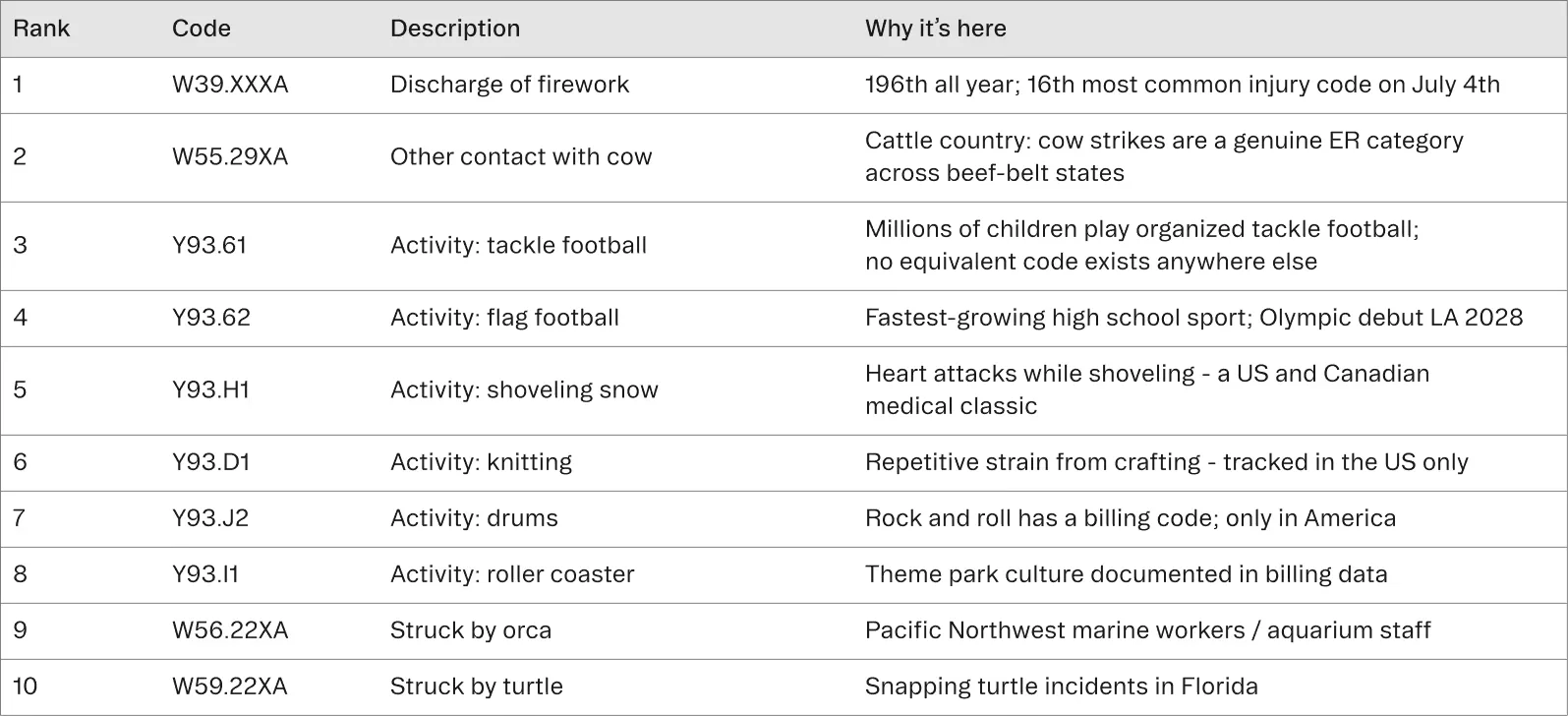
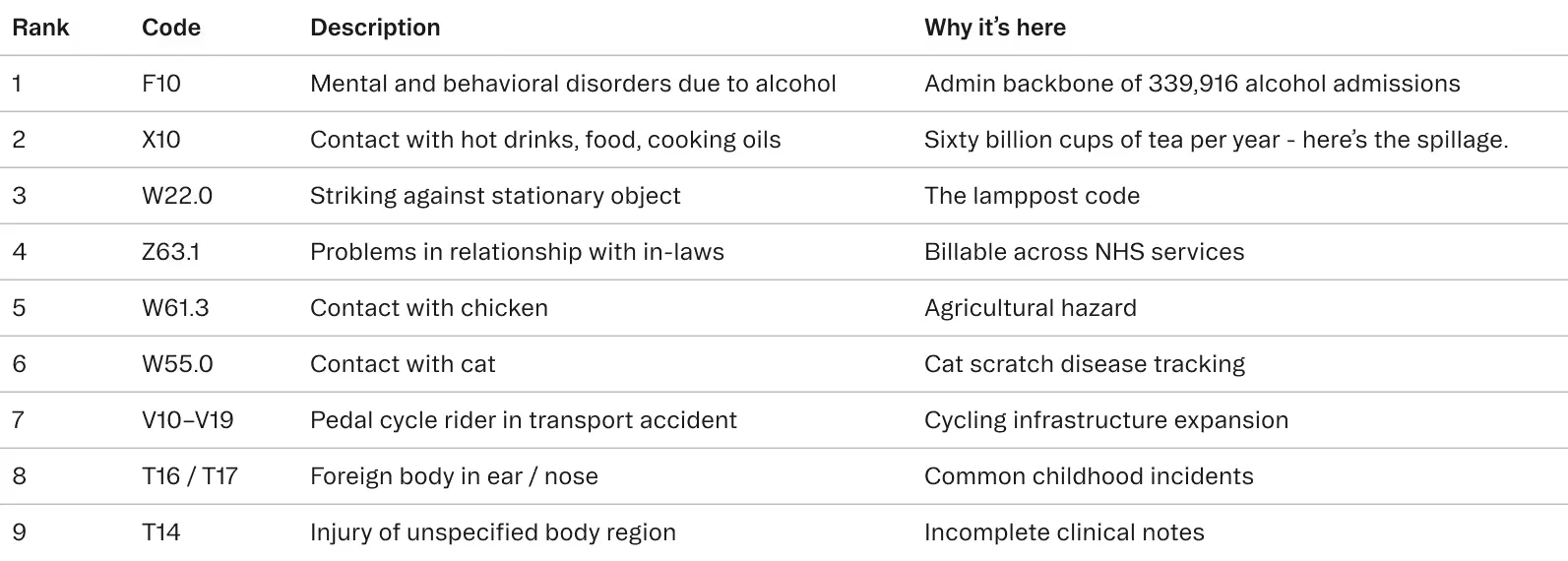
Many of these codes, at first glance, seem absurdly specific. There is a code for burns due to water skis on fire. There is a code for problems with your in-laws. There is a code for injuries sustained while knitting, and separate codes for tackle football and flag football. In London, lampposts were once padded because so many people were walking into them while looking at their phones — and yes, there is a code for that too. There is even a code for being struck by a duck.
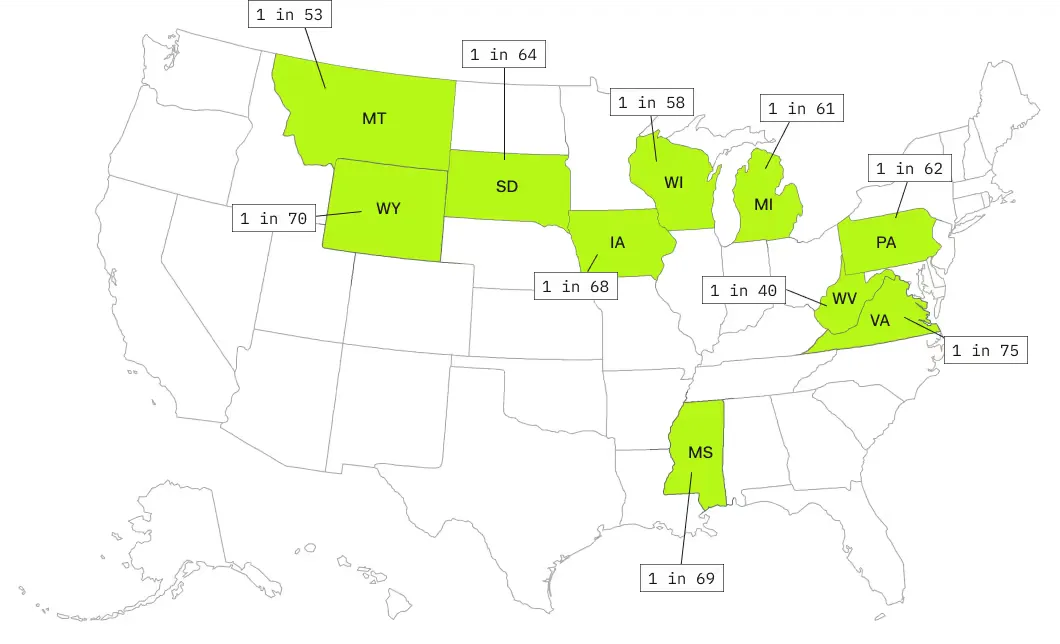
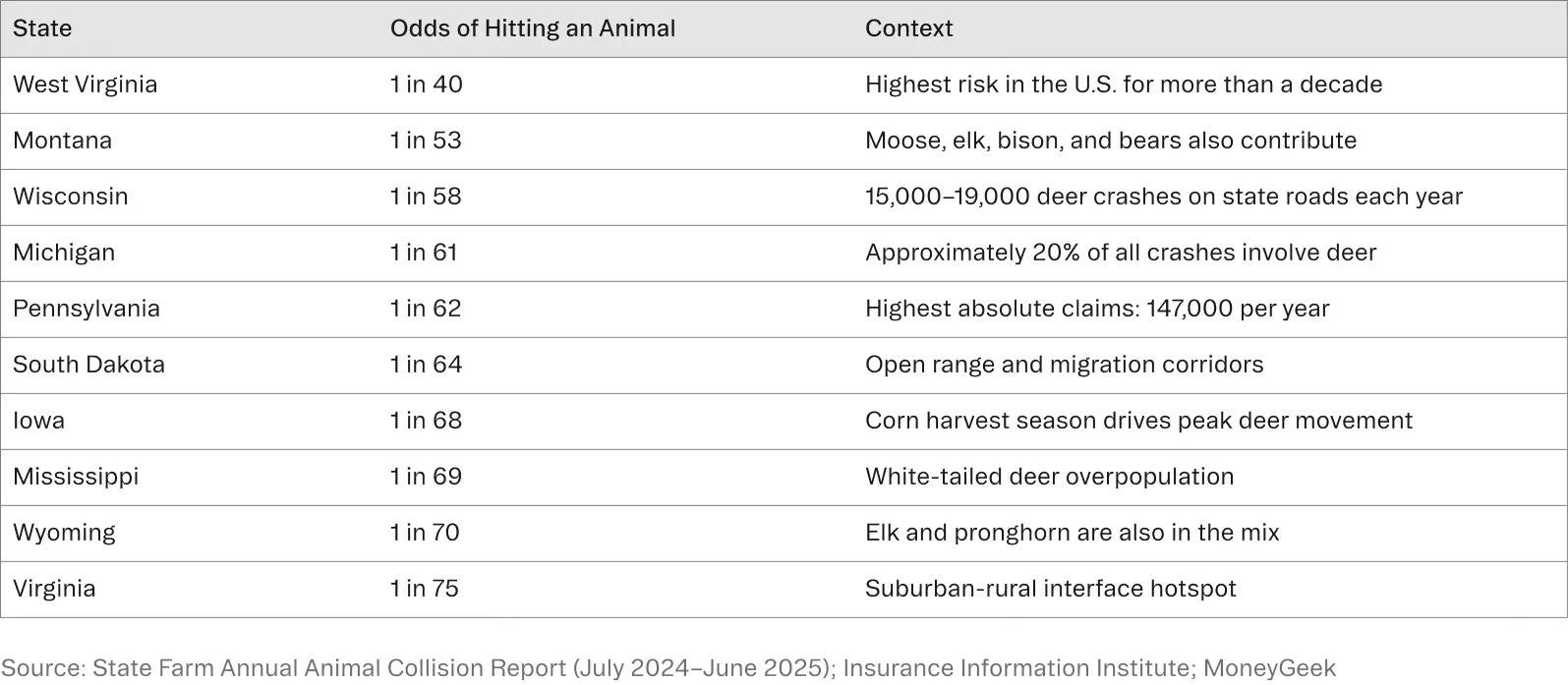
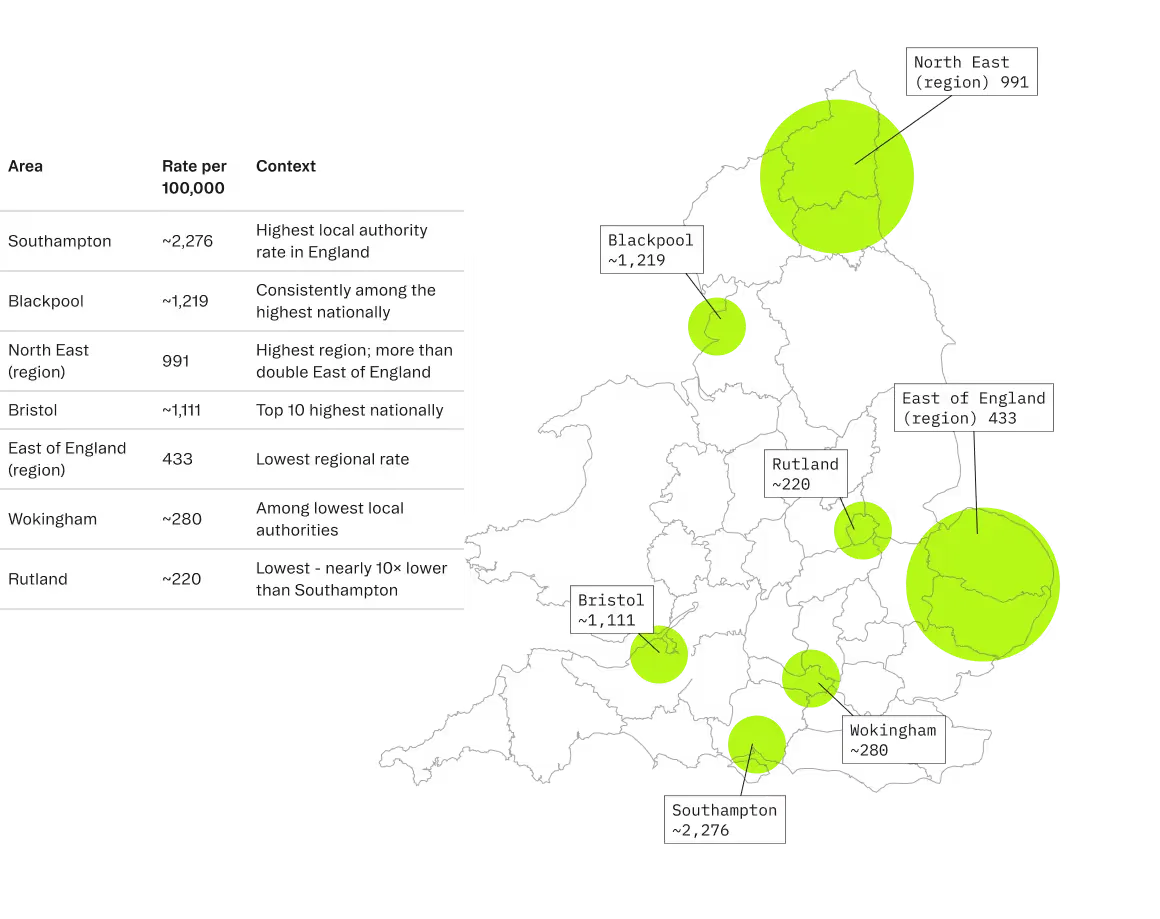
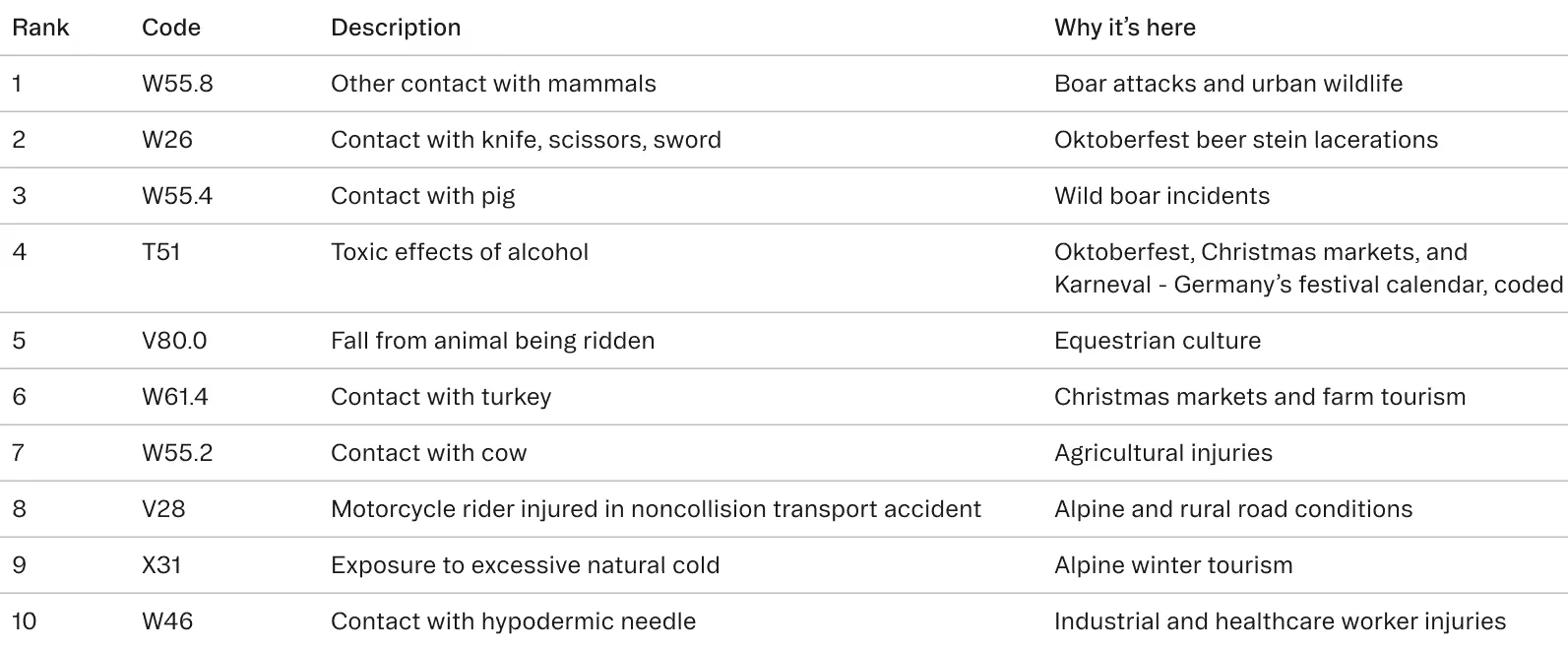
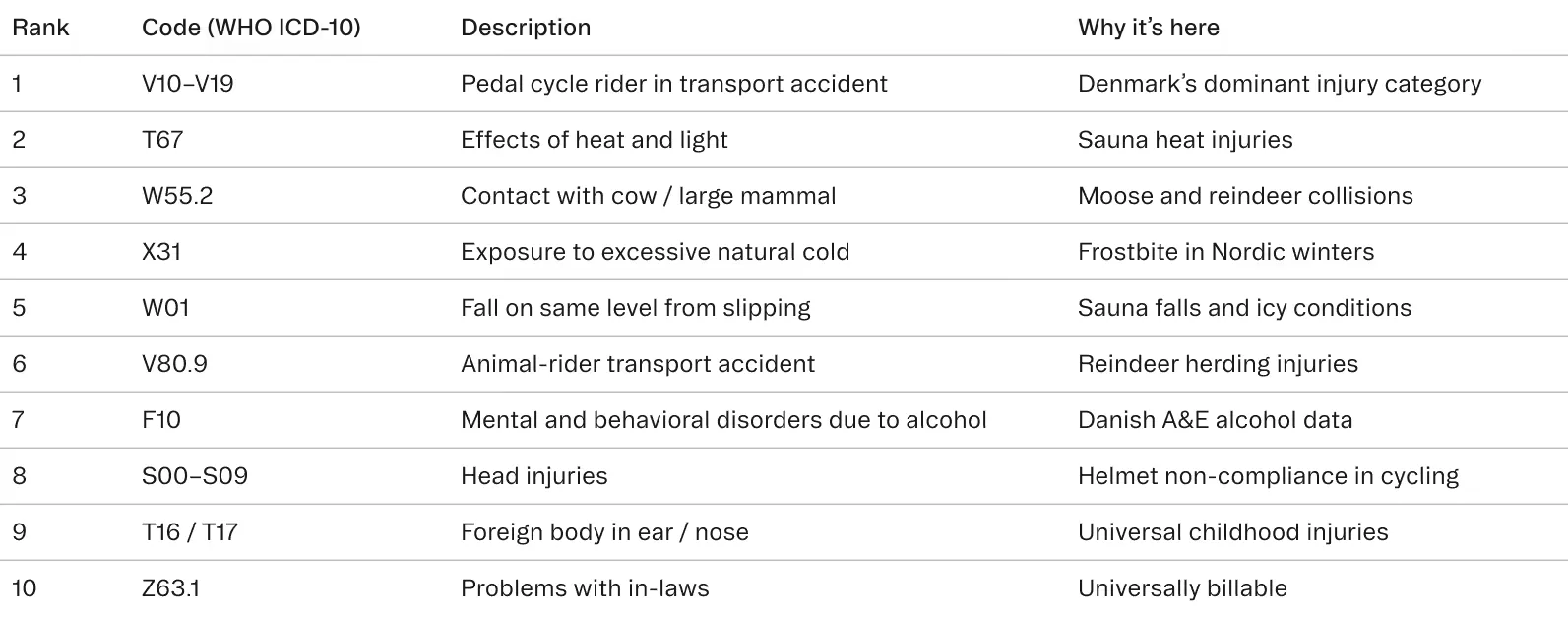
But the specificity is not madness. It exists because the system must account for everything, even the absurd. In this report, we will demonstrate this by analyzing the most frequent codes in each country. An anthropological study told with alphanumeric codes. The codes will tell a story of how people in each nation live: what animals they share space with, what they do on weekends, how they celebrate, and what their domestic life looks like from the emergency room.
With this knowledge, the governments can make policies to prevent injuries and deaths. This is why reporting these sometimes absurdly specific codes is so important. It helps us understand society, so that we can improve it.